Posted on — Leave a comment

Focus on What’s in Front of You

I like to think about the big picture.

I always try to connect the dots and think outside the box, by shifting and putting things back together in a different light.

This is a positive skill because it allows me to understand the dynamics of how the world works.

Though, as with many things, you can over-do it. This type of mindset can hold you back. It’s often hard to make progress when your head is constantly in the clouds at a 10,000 foot view.

It’s super important, especially when you’re responsible for the outcome of an initiative and there are others involved, to keep everything in perspective. BUT, you have to focus on what’s in front of you.

If you lose sight of what’s going on today and what the next step is, you can look as far into the future and at the biggest picture possibly, but you’ll never get there.

This is why “taking baby steps” is such a common expression. Many people scoff at baby steps because it sounds like you’re not making that much progress.

Think a little differently. Who said you can’t take the baby steps super quickly?

A ton of baby steps adds up to the big leaps.

Keep your eyes high in the sky, but keep your nose to the grind.

Posted on

Planning Your Day

What’s the first thing you do when you start your day?

I’m not talking about your breakfast, shower or even morning workout. I’m talking about your day of work.

Do you get to work and just dive right in? That might feel like the right thing to do — jump right into what you need to do and get the ball rolling. However, that approach doesn’t allow for much  vision. Until recently I would just log on, check my email, read the news and just open some analysis I was working on without really setting any plan for my day. It’s easy to skip a plan in a day and age when there are a million things that will likely derail the plan even if you make it. Don’t let that fact fool you. Making the plan still helps by providing clarity and accountability which helps you say no to things that aren’t priorities.

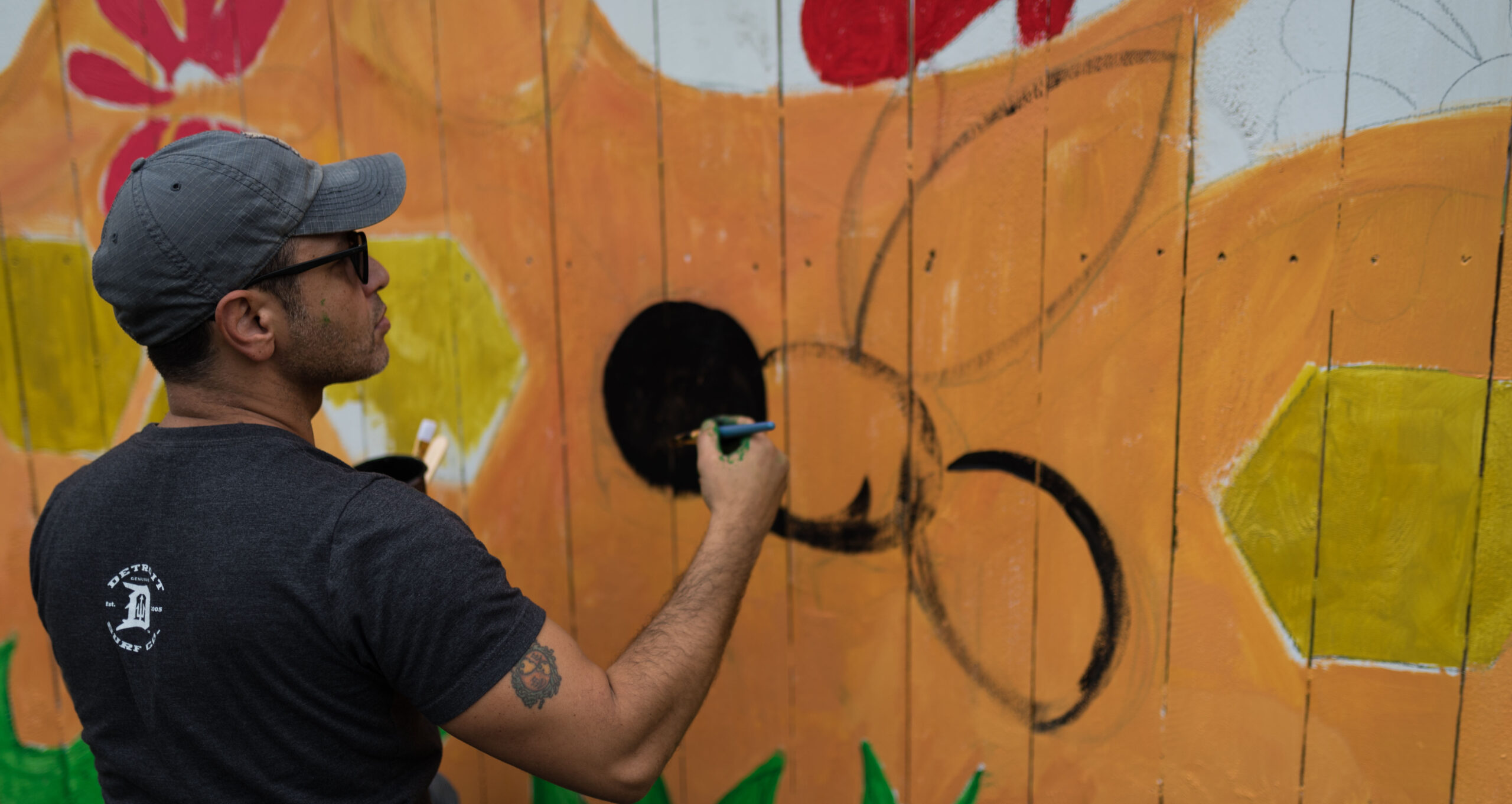
Here at Elite we are all about setting big goals and living dreams rather than just dreaming them. In order to make progress, you need to be aware of these goals and then further you need to chunk them out into smaller bites. If the goal is to finish a painting in the next month, it helps to have an idea of what parts of the painting process need to be done by which deadlines. No matter how big your goal is or how long the time-horizon is, breaking it down day-by-day will provide you with a better chance of success.

Take some time to plan out your day, so that you can live a lifetime according to your plan.

Posted on

Setting Clear Expectations

Expectations.

They come from others, they come from yourself and overall they can be very stress-inducing.


It’s understandable why they result in stress. Stress is a natural response that drives action. Correctly set expectations help drive behavior in order to accomplish goals. So, expectations are a vital part of any goal or relationship so that the parties involved are able to communicate and understand the future.

With that being said, expectations can also cause a destructive form of stress. This occurs when the expectations are not clear. Without a benchmark, how can you measure success? There is no way to assess your progress or understand your priorities. Without clear expectations, people begin to expect too much of themselves or others and relationships (both internal and external) are put at risk, while progress towards goals takes a hit.


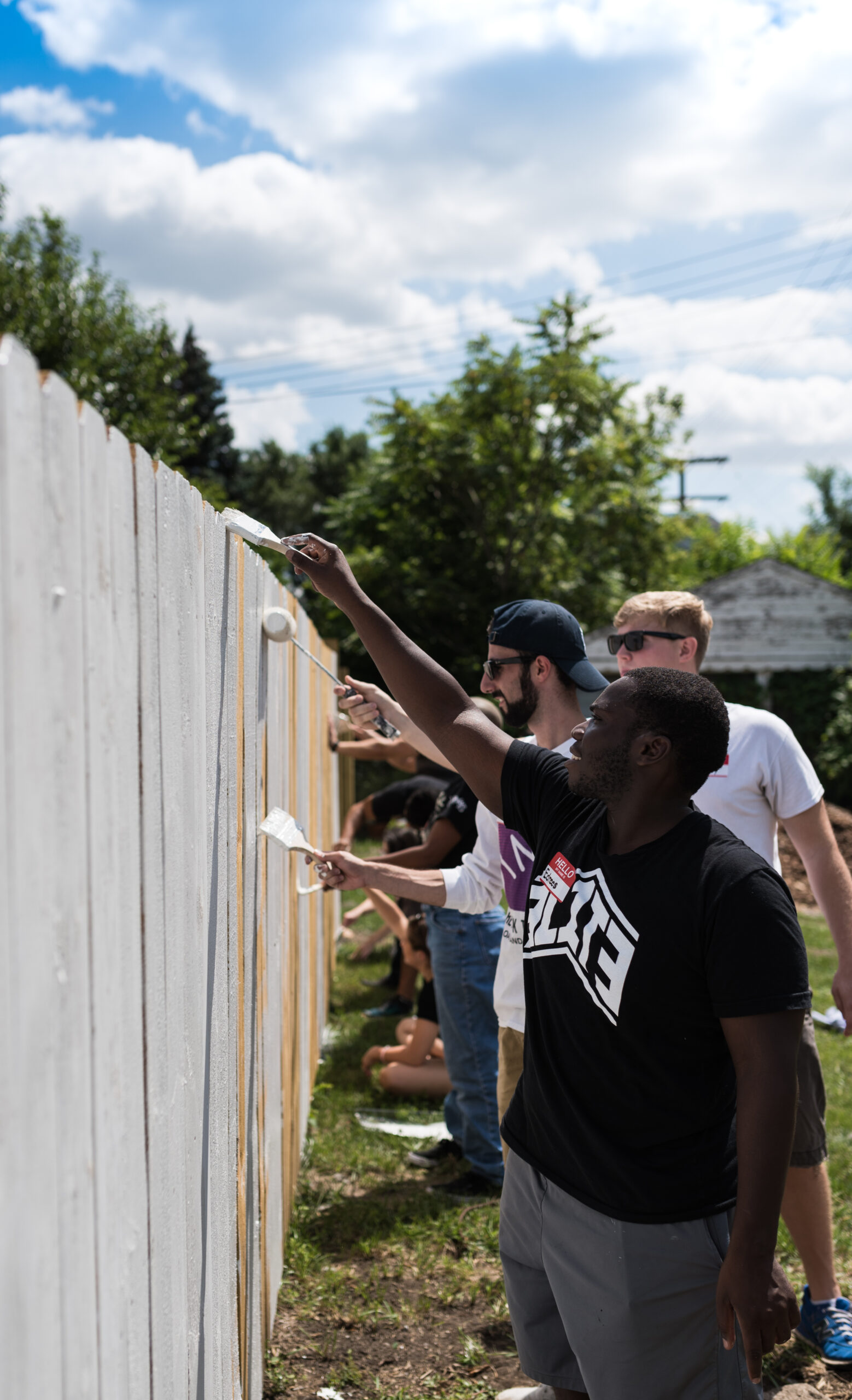
This is something we are focused on as a team here at Elite. Here’s what we’ve learned over the course of our Summer ’17 community projects.


  • Clarity drives accountability
    • It’s easier to make excuses when you leave yourself grey area.
    • You are more inclined to accomplish a task when your team knows what you’re working on.
  • People know what to expect
    • You won’t surprise them for the worse
    • Efforts that go above and beyond will be noticed more
  • Prioritization and planning are improved
    • It makes it easier to decide what to do next
    • You can decide whether or not you have enough time to commit to the task


So take the extra time, whether with your own life or your team, and make sure you’re setting clear expectations.


Posted on

Do What You Say


DSC_0957


You should do what you say. It builds trust.

It gives value to your words and let’s others know they can depend on you. It also allows you to depend on yourself.

When people talk about building trust, they often focus on relationships between people. Thus, they fail to highlight the importance of building a trusting relationship with oneself. One could argue that self-trust is more important. First off, it doesn’t seem to follow that you can truly trust other people without first trusting yourself. In addition, you spend more time with yourself than you do with anyone else. That time should be of the highest quality and with the highest level of honesty possible. This is a fundamental piece of the growing process, and if you fail to be honest with yourself, you open yourself up to be dominated by circumstance.


You should do what you say.  It allows you to take control.

It improves your planning, both formally and informally as you have a better idea of how much will power you have. It also helps grow your will power.

When you are in the habit of making plans that you don’t truly plan to keep, your sense of both time and will power can become blurred. You will lose sight of how long things truly take and big goals begin to seem like a quick burst of effort rather than an all-in commitment. It follows that with a clearer understanding of how much effort things take, we can better gauge our own will power capacity. As we understand how much we can reliably do, we can grow.


You should do what you say.  It feels good.


#DoWhatYouSay #EliteDET

Posted on

Earn Your Sleep

As someone who aspires to do a lot in his lifetime, I find myself reading content on self-improvement and dedication.

Researchers consistently post studies about how beneficial sleep is for so many aspects of our lives. It helps our digestion, our muscle repair, our psychological stability and especially our mental capacity. Healthy sleep habits can have a large impact on how successful you are at living a healthy and fulfilling life.
On the other hand, a lot of the motivational content in the marketplace pushes the idea that in order to be successful, you have work 24 hours a day and 7 days a week. Some people practice lucid dreaming so they can even work in their sleep. Others talk about how you can sleep when you’re dead. That’s not a very attractive proposition if the lack of sleep contributes to an earlier death.

I understand that there are circumstances where it is hard to get sleep due to things we can’t control. Although in the long run, we should prioritize sleep and cut out other things in order to allow for a healthy amount of Zzz’s. This doesn’t necessarily mean cutting your recreational time back — That time is important in its own right (by the re-charge and re-motivation it yields.)

Mostly this is a matter of efficiency, and this is something I have struggled with personally. There were plenty of times where I spent more time talking about how busy I was and put on a show of how hard I was working. The idea was that the more time I spent and the longer I stayed up, the more valuable the work was. It’s a pretty delusional way of approaching things, and I’m extremely grateful that I’ve begun to understand that.

Thus, your goal should not be to work longer, but to work harder. This means having more focused and intense bursts of work that result in higher quality output and enhanced stamina. This is something we refer to at Elite as taking small bites, where you are able to get more done while feeling less pressure and anxiety. This deep-focused work is not easy and can be exhausting, but that’s the point of doing it — by the time your head hits the pillow you will be knocked out because of how hard you worked.
Again, if you have some limiting factor that makes it physically impossible to get a healthy amount of sleep on a particular night, then get the job done. However, you should be in the habit of planning to get a healthy amount.


Don’t kill yourself and your brain by depriving yourself of a basic human necessity. Instead, work your heart out during the day so that by bedtime, you’re exhausted and your body needs the sleep you’re about to reward it with.


#EarnYourSleep #EliteDET
Posted on

Publish More, Publish Often

We have a gift that we can share with the world.

A gift that some choose to share, while others hold back.


Our gift is our perspective. From our perspective we can analyze what we observe and help improve society based on what we understand. Our diverse ideas and interpretations allows for us to grow as a society. We put our perspectives in to action to build and create. Without action, our perspectives are wasted.


No matter what you enjoy, where you work, and who you are, your perspective can have a profound impact.


So publish it. Share your gift.


We overestimate the risks associated with going live. Don’t keep the idea locked away — Share it.
Publish More, Publish Often

Posted on

The WORST Excuse

“I don’t have time”

I could write a long, comprehensive defense of my claim, but quite frankly there’s no point in arguing with anyone who will constantly present the world with excuses for why they aren’t perfect. I’m not claiming sainthood to any extent — I am prone to the same mistake. This is to assert that we can create time out of thin air to do the things we are passionate about. Don’t let the fear of failure dampen your passion, and slow your progress.

  1. Don’t lie to yourself.
  2. Find the Time
  3. Everybody has time, and we all choose how to spend it.

“Time is the greatest equalizer – Magnify your use of it.” 

-Someone Smart

Posted on

Take Small Bites

Today is the day that all of the gyms fill up with dreams.

People want to improve themselves and be the best they can, so they set ambitious goals. They want to look good in their swimsuit this year. They tell themselves that this is the year that it finally changes — that this is the year they finally follow through.

Somewhere in the back of our heads, we know we’re overstepping our bounds. We know that not much has actually changed, just the number on the calendar.

Still, we press on. We dream on. We want 2017 to be the year it all changes.

We buy new shoes, new clothes and a fancy membership to a fancy gym. However, we forget to make the biggest investment — We forget to invest in our goals.

Our “goals” are ultimate and grandiose. We want this year to be perfect, and that’s our “goal.”

Our goals should be realistic, so our subconscious won’t be filled with doubt and so that we can actually make consistent progress.

It’s OK to have a dream. It’s actually really healthy. However, it needs to be supported by a structure of smaller attainable goals that can be put into action.

Look at the big picture and take small bites.

Make 2017 a year of progress, not perfection.

G.R.I.N.D.